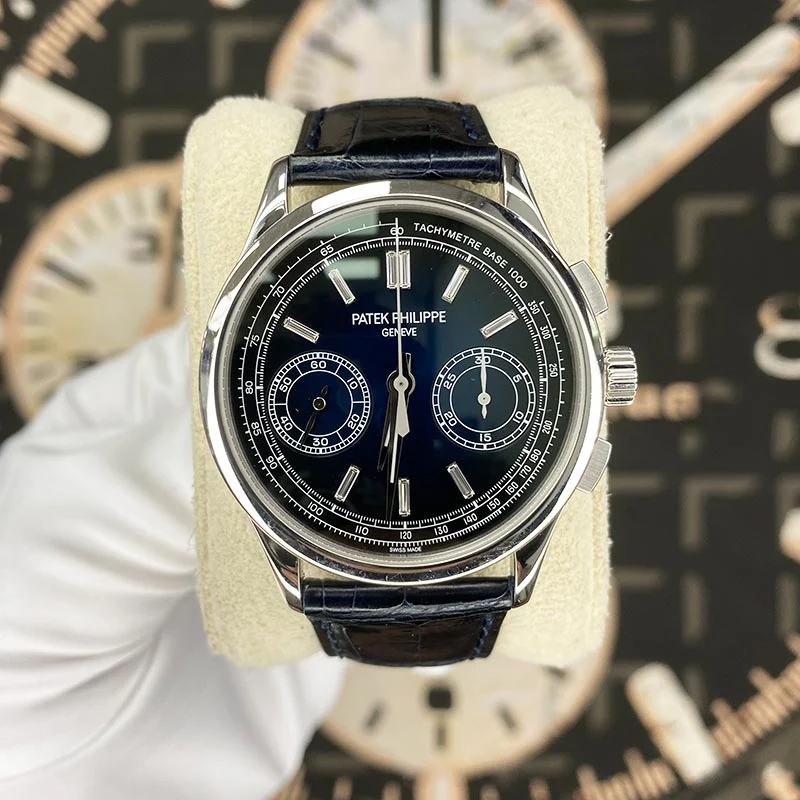


Walk into any boutique, and you'll hear the same script. Platinum is "the most prestigious." White gold is "timeless." Steel is "sporty." None of it tells you anything useful. What you actually want to know is how the metal holds up on your wrist, what it'll cost you to keep it looking good, and what it's worth the day you sell.
We buy and sell precious metal pieces every week, so we see firsthand how these materials age. Here's the honest version of what matters when you choose one.
Yellow Gold
The classic. Pure gold is 24 karat, but pure gold is soft enough to scratch with a fingernail, so jewelry and watches use alloys. 18k gold is 75% gold mixed with copper and silver for strength. 14k is 58.5% gold, harder still, and common in American jewelry.
What that means for you: 18k has a richer color and more intrinsic gold value. 14k takes daily abuse better. Neither will tarnish, ever. As a result, yellow gold is one of the lowest-maintenance precious metals you can own, though, like any gold, it softens in finish over the years of wear.
At resale, yellow gold always has a floor: the melt value of the metal itself. A gold chain or bracelet can never be worth less than its weight in gold, so the metal itself sets the baseline.
White Gold
Here's the thing: most people don't learn until years after they buy it that white gold is still gold. It starts as a yellow gold alloyed with white metals to lighten the color, then the finished piece is dipped in rhodium, a bright white metal from the platinum family, to give it that mirror finish you see in the case.
That rhodium dip wears down over time. When it does, you'll notice a slightly warm tint through, and a jeweler can re-rhodium the piece to restore the bright white. It's not something you need on a schedule, just every so often when the piece starts to warm up, and it's a quick, inexpensive service. So white gold gets an unfair reputation as high-maintenance. It isn't.
On watches, white gold is a quieter flex. It sits very close to steel in color, close enough that most people won't clock the difference across a room, though side by side, there's a subtle warmth and depth steel doesn't have. Some collectors love exactly that. You know what's on your wrist even if nobody else does. The weight gives it away the moment you pick it up.
Rose Gold
Rose gold isn't actually a color of gold. It's yellow gold cut with copper and a few other metals until it turns that warm pink, and every brand keeps its exact mix to itself. Put a Rolex Everose piece next to a Patek rose gold piece and you'll see it. They're just different recipes. The mix changes more than the shade, too. It affects how the metal wears and whether the color holds up. Older rose golds tended to lose their pink over the years as trace metals leached out, which is why Rolex developed Everose in the first place. Nobody does it better than them right now, with Patek and AP close behind.
Beyond the color, rose gold behaves like yellow gold: no tarnish, no dipping, and the copper content makes it marginally harder.
Platinum
Heavier than gold, and you feel it immediately. Pick up a platinum watch after a gold one, and the difference is unmistakable. It's naturally white all the way through, so there's no rhodium dip and nothing to redo. That sets up the first part of platinum's appeal.
Platinum is also the only metal here that doesn't lose material when scratched. Gold scratches shed tiny amounts of metal; platinum scratches just displace it. Over decades, that matters.
The trade-off is that platinum scratches easily and develops a soft, matte patina with wear. To be fair, gold does this too. Yellow and rose gold pieces worn daily develop the same lived-in finish. Some people love that look. Others bring their pieces in every year to have them polished back to their original brightness. Neither is wrong, but you should know which person you are before you buy.
One more thing about platinum that's easy to miss: it's genuinely difficult to work with. Shaping it, setting stones in it, even polishing it, takes a true craftsman, and not every bench jeweler can do it well. That labor is part of what you're paying for.
Which explains the pricing. Despite the prestige premium on new platinum watches and jewelry, platinum's spot price has traded below gold's for years now. You're paying for density, rarity of finished pieces, and the skill required to work the metal, not the raw material. At resale, branded platinum pieces from major houses do fine. Generic platinum jewelry resells more like its metal content, and usually less favorably than gold.

Stainless steel: The Honest Outlier
Steel isn't a precious metal, and it doesn't pretend to be. Yet right now, some of the strongest demand in the entire watch market lives there. A steel Daytona or Nautilus trades above its gold sibling in some cases, purely because of demand and scarcity.
That tells you something important: with watches, the brand and model drive value more than the metal does. The metal sets the floor. The market sets the ceiling, so the watch matters more than the metal.
For jewelry, it's the opposite. Metal content is the main story, which is why we weigh and test everything we buy.
Quick Comparison
| Metal | Maintenance | Scratch behavior | Resale floor |
|---|---|---|---|
| Yellow gold | None | Scratches, sheds metal, patinas with wear | Melt value, always |
| White gold | Rhodium dip every so often | Same as yellow under the finish | Melt value |
| Rose gold | None | Same as yellow, slightly harder | Melt value |
| Platinum | Optional polishing | Scratches easily, keeps its metal | Melt value (currently below gold per gram) |
What We'd Tell You Across the Counter
Buy yellow or rose gold if you want low maintenance and a guaranteed value floor. Buy white gold if you love the look; the occasional rhodium dip is a minor thing, not a burden. Buy platinum if you want heft and permanence, and you appreciate craftsmanship, since every platinum piece took real skill to make.
Buy steel if the watch you actually want comes in steel, because the right steel watch can outperform all of them at resale. That's the simplest way to think about the choice. The choice comes down to wear, upkeep, and resale.
Whatever you buy, buy it from someone who'll tell you how it actually wears, like us, at Gotham Trading NY. The metal is the one part of the piece you'll touch every single day.
Curious what your gold or platinum pieces are worth today? Book an appointment, and we'll evaluate them in person, no obligation.