

A complication is anything a watch does beyond telling the time. That's it. The name makes it sound like a problem, and mechanically, there's some truth to that, since every extra function means more parts and more assembly. But complications are also where all the fun is. A time-only watch tells you it's 3:15. A complicated watch is a tiny machine doing something clever on your wrist, and that's the part that gets people hooked.
We handle watches at every level, from a bare three-hand dress piece to minute repeaters. Here's what the common complications actually do, and our honest take on which ones are worth paying for.
The everyday complications
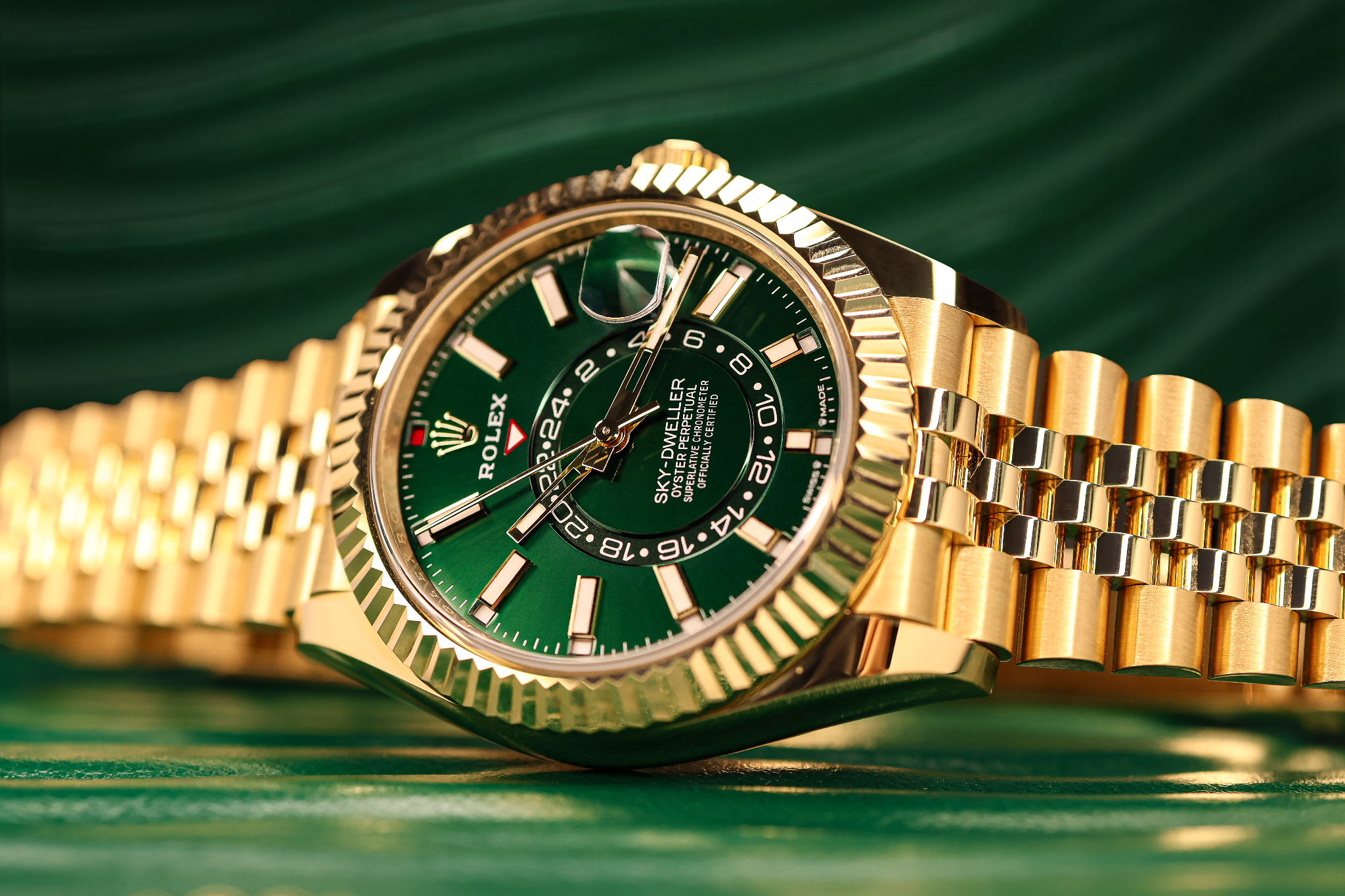
Date window. The most common complication in the world. A small disc rotates once every 24 hours to show the date. Some watches display the day of the week, a feature Rolex made famous with the Day-Date. The nickname "President" stuck after the watch ended up on presidential wrists, and it never left.
One thing owners get wrong: never set the date between roughly 9 PM and 3 AM on most mechanical watches. The date-change gears are already engaged during those hours, and forcing the setting can strip them. It's one of the most common repairs we see, and it's completely avoidable.
Chronograph. A stopwatch built into the watch. Push the top button to start, push it again to stop, push the lower button to reset. The Rolex Daytona, Omega Speedmaster, and Patek Philippe 5905 are all chronographs.
Most people who own a chronograph almost never use it. They buy it because the sub-dials look great, and honestly, that's a fine reason. Just know that a chronograph adds real cost to servicing because there are a lot more parts in the movement.
GMT / dual time. A fourth hand that tracks a second time zone, usually read against a 24-hour bezel. Rolex built the original GMT-Master for Pan Am pilots in the 1950s, and the idea hasn't changed much since. If you travel or do business overseas, this is one of the few complications you'll genuinely use every week.

The impressive ones
Annual calendar. Knows the difference between 30-day and 31-day months, so you only correct it once a year, at the end of February.
Perpetual calendar. Knows about February and leap years, too. Set it correctly, and it won't need adjusting until the year 2100. This is high complication territory, and prices reflect it. Patek Philippe built its reputation largely on these.
Moonphase. A disc showing the current phase of the moon. Zero practical use for almost everyone, and one of the most beautiful things you can put on a dial. Some purchases are about the heart, not the spec sheet.
Tourbillon. A rotating cage that spins the escapement to average out the effects of gravity on the movement. Tourbillons are known for precise timekeeping. That was the entire point of the invention, and it's still what they're famous for. The other thing you're paying for is the hand-finishing, because building one takes an extraordinary level of skill, and that's a big part of why tourbillons routinely start in the six figures.
What complications do to value
Here's the part most blogs skip. More complicated does not automatically mean better resale.
The complications that hold the most value are the ones on watches people actually want: the chronograph on a Daytona or Speedmaster, the GMT function on a GMT-Master II. The watch drives the value. The complication is along for the ride.
Extremely complicated pieces from top houses, your perpetual calendars and minute repeaters, can be appreciated, but they trade in a thinner market. Fewer buyers can afford them, so selling takes longer.
And a complication on a brand nobody's asking for adds almost nothing at resale. A moonphase doesn't rescue a watch that the secondary market has no appetite for.
Servicing: the cost nobody mentions at the boutique
Every complication adds parts, and parts wear. A basic time-only mechanical watch might cost a few hundred dollars to service. A chronograph typically runs meaningfully more, and a perpetual calendar service at the manufacture can run into the thousands.
The case matters too, which surprises people. Some watches are simply harder to open up and put back together than others, and if a watch is complicated to take apart, it costs more to work on before anyone even touches the movement.
None of this is a reason to avoid complications. It's a reason to budget for them, and to buy from someone who'll tell you the truth about ownership costs before you commit, not after.
So which should you buy?
If you'll actually use it: a date, a GMT if you travel, maybe a chronograph if you time things.
If you want something special: a moonphase or annual calendar gives you a lot of visual and mechanical interest without perpetual-calendar money.
If you're collecting seriously, buy the best example you can find from a maker with a real track record, and buy it with the box and papers.
Come see us at Gotham Trading NY, and we'll gladly put a few on your wrist. Complications make a lot more sense in person than they do in a blog post.
Have a question about a specific watch or complication? Use the "ask about this watch" button on any listing, or book an appointment to come see us in person.